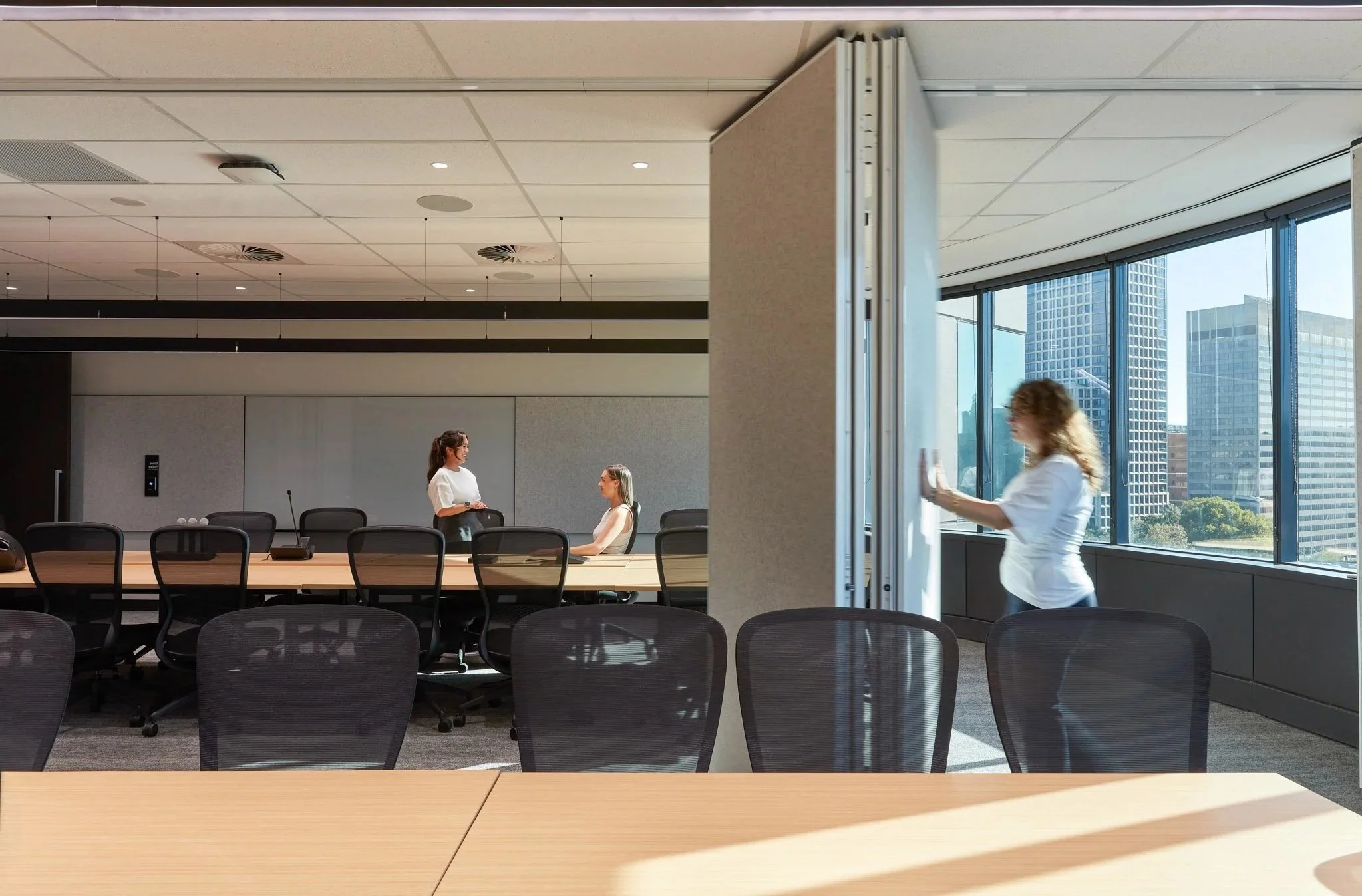
INSIGHTS FROM THE NEXT GENERATION OF LEADERS AND THINKERS
the enduring value of a physical workplace
Our 2019-2025 research study, in collaboration with UNSW Sydney, explores what people now expect from the workplace and what organisations need to change to make in-person work feel valuable, purposeful and worth the commute.
What the research says
WHAT IS THE VALUE OF A PHYSICAL WORKPLACE?

CONNECTION IS THE GLUE
Face-to-face interaction supports belonging, trust, learning and the informal exchanges that help organisations work well.

COMFORT IS CRITICAL
Physical, functional and psychological comfort shape whether people feel able to focus, connect and thrive.

THE OFFICE MUST EARN THE COMMUTE
People will come in when the workplace offers something they cannot easily get at home: connection, inspiration, access and shared purpose.

PHYSICAL PLACE ANCHORS CULTURE AND IDENTITY
Shared physical environments give teams a tangible sense of “who we are”, reinforcing values and everyday rituals.

THE WORKPLACE SIGNALS VALUE
People read the quality of the workplace as a signal of how much their organisation values them and their work.

FRAMEWORKS MATTER MORE THAN RULES
Successful hybrid work needs trust, autonomy and clear purpose, rather than rigid attendance mandates.

LEARNING HAPPENS BY OBSERVATION
The workplace helps people learn through shadowing, modelling behaviours, informal feedback and access to experienced colleagues.

PERFORMANCE AND INNOVATION
Shared environments help teams solve complex problems, test ideas and build momentum through the everyday exchanges that are harder to replicate remotely.
27%
of today’s workforce is made up by Gen Z, bringing new expectations around career, loyalty and place.
64%
of employees across Australia say they feel burnt out at work at least some of the time.
39%
of workers’ core skills are expected to change by 2030 as new ways of working shape roles.
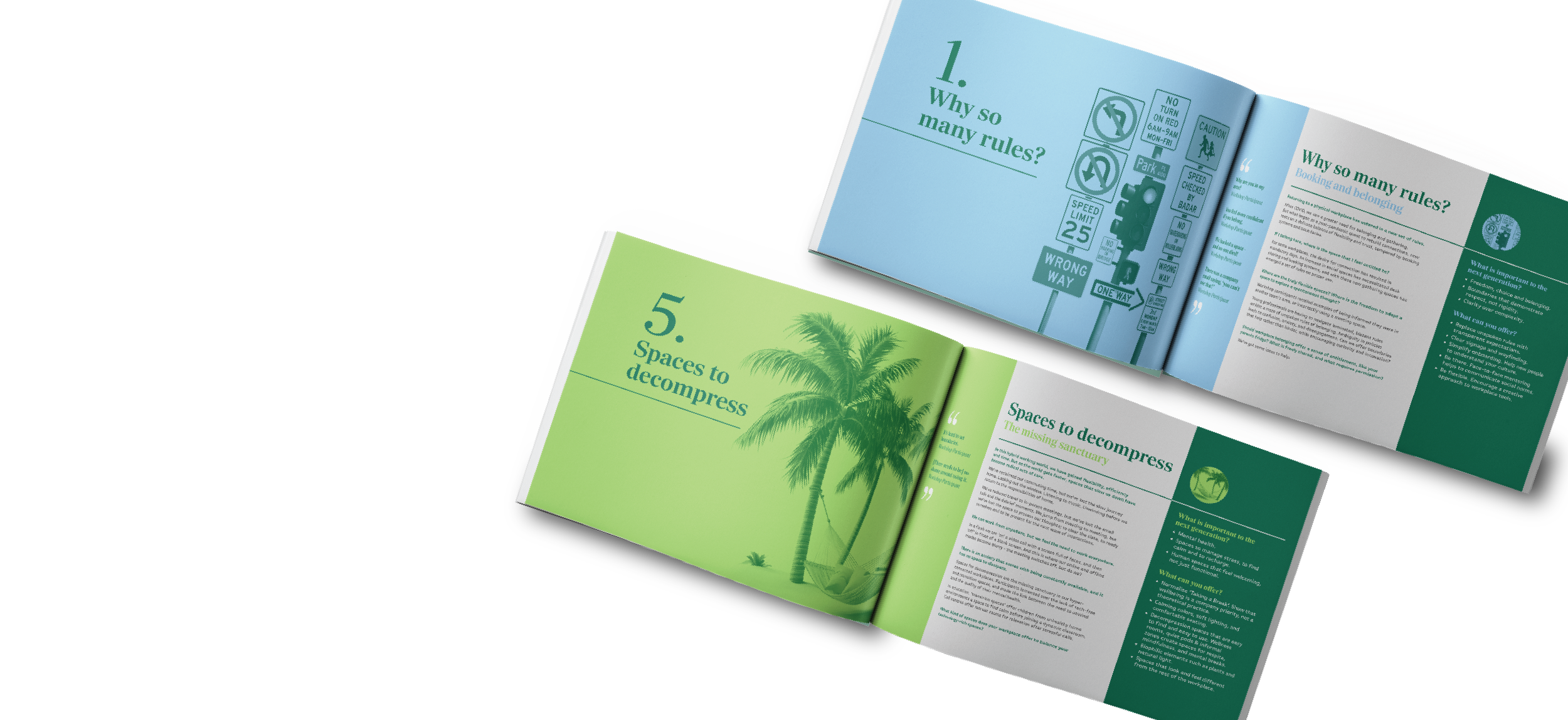
Why read the report?
Explore six years of exclusive insight into hybrid work, Gen Z expectations, workplace comfort, connection, belonging and the enduring role of the physical workplace.
what makes work stick
In a changing world of work, the spaces we create do more than house people. They shape culture, behaviour and long‑term commitment.
Meaning and belonging
People want to feel part of something, with spaces that support connection, inclusion and shared purpose.

Connection and trust
The most valuable workplace moments often happen through everyday conversations, visibility and information exchange.
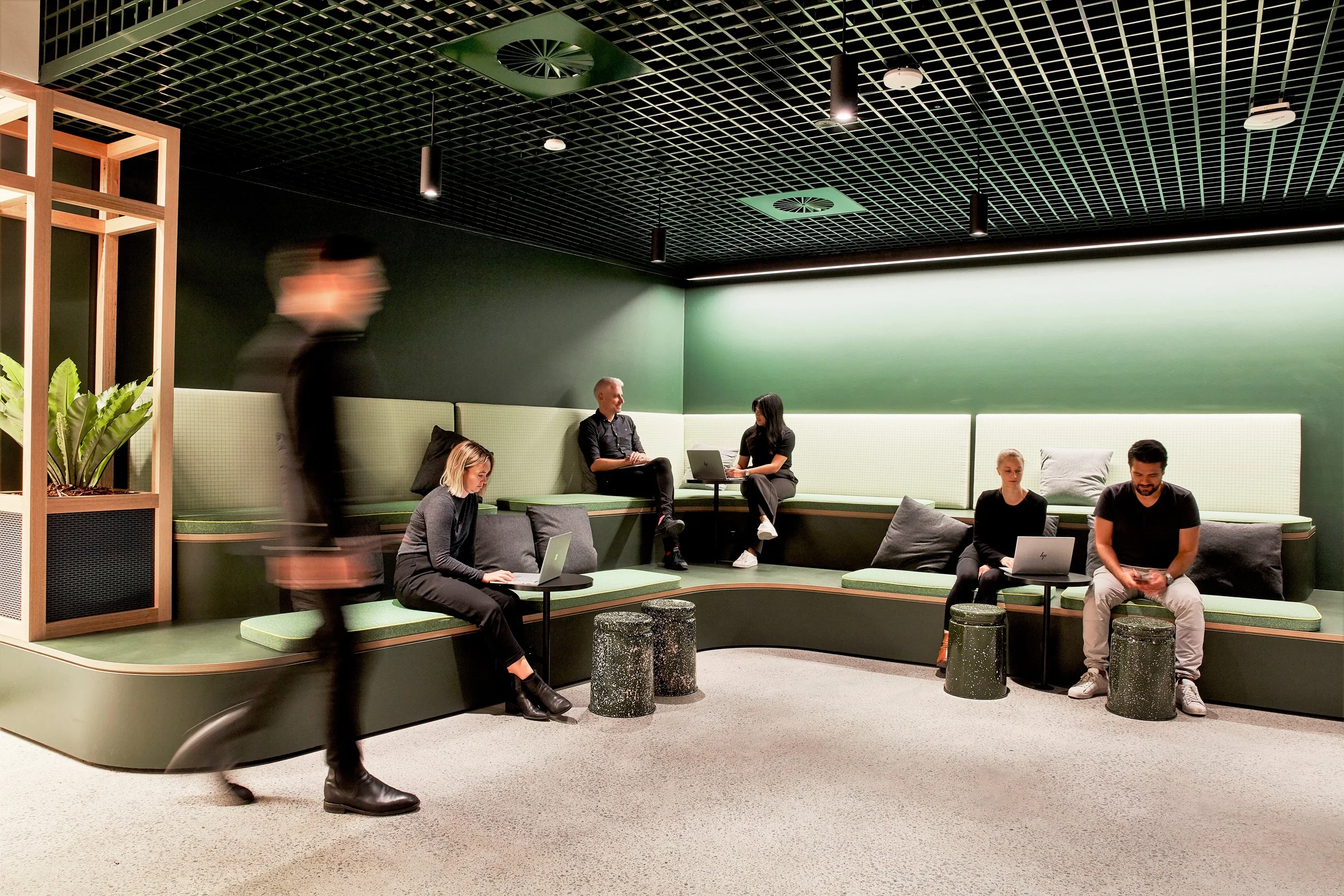
Learning and growth
Workplaces need to support curiosity, mentoring, skill development and informal learning between generations.
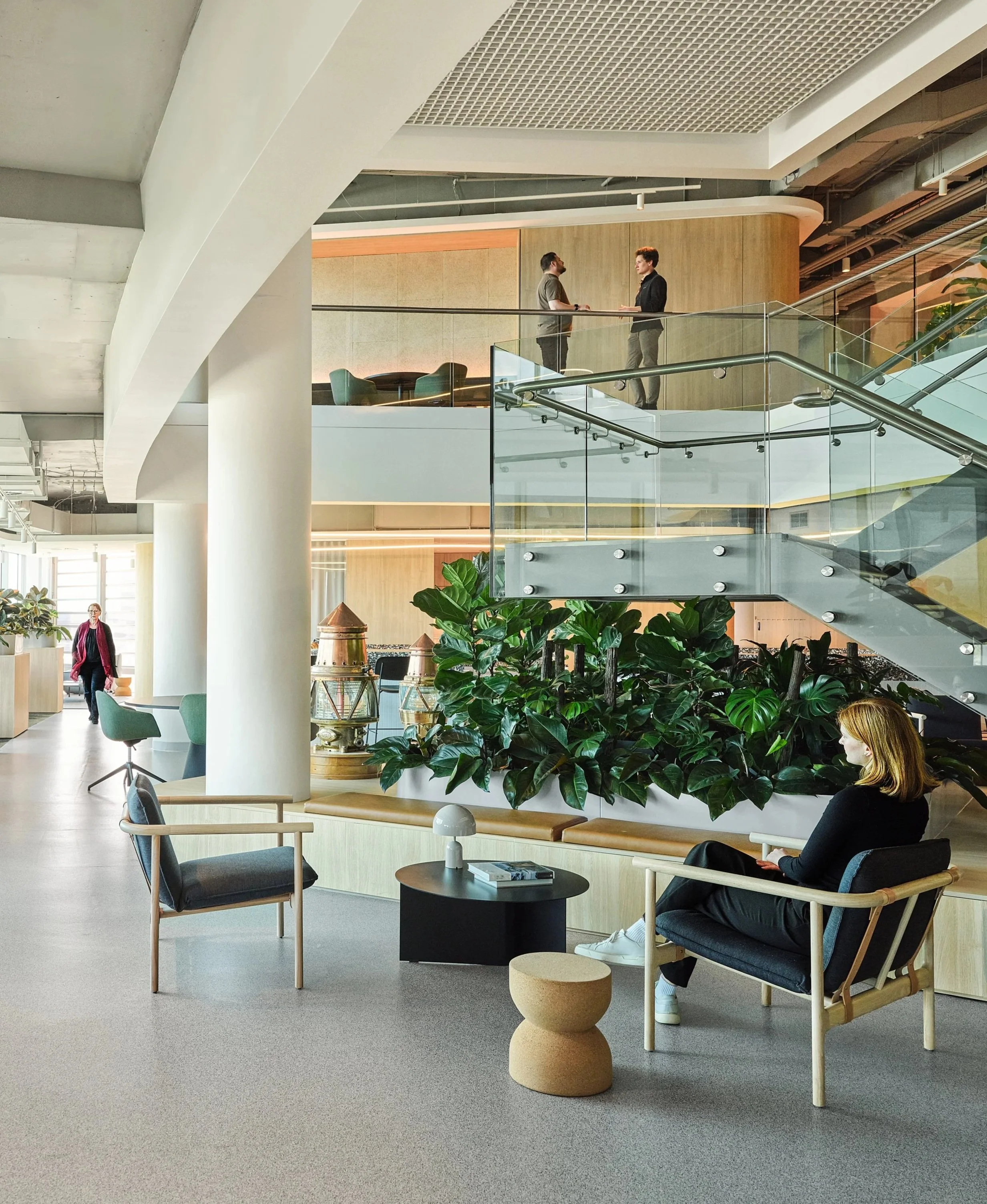
Comfort and autonomy
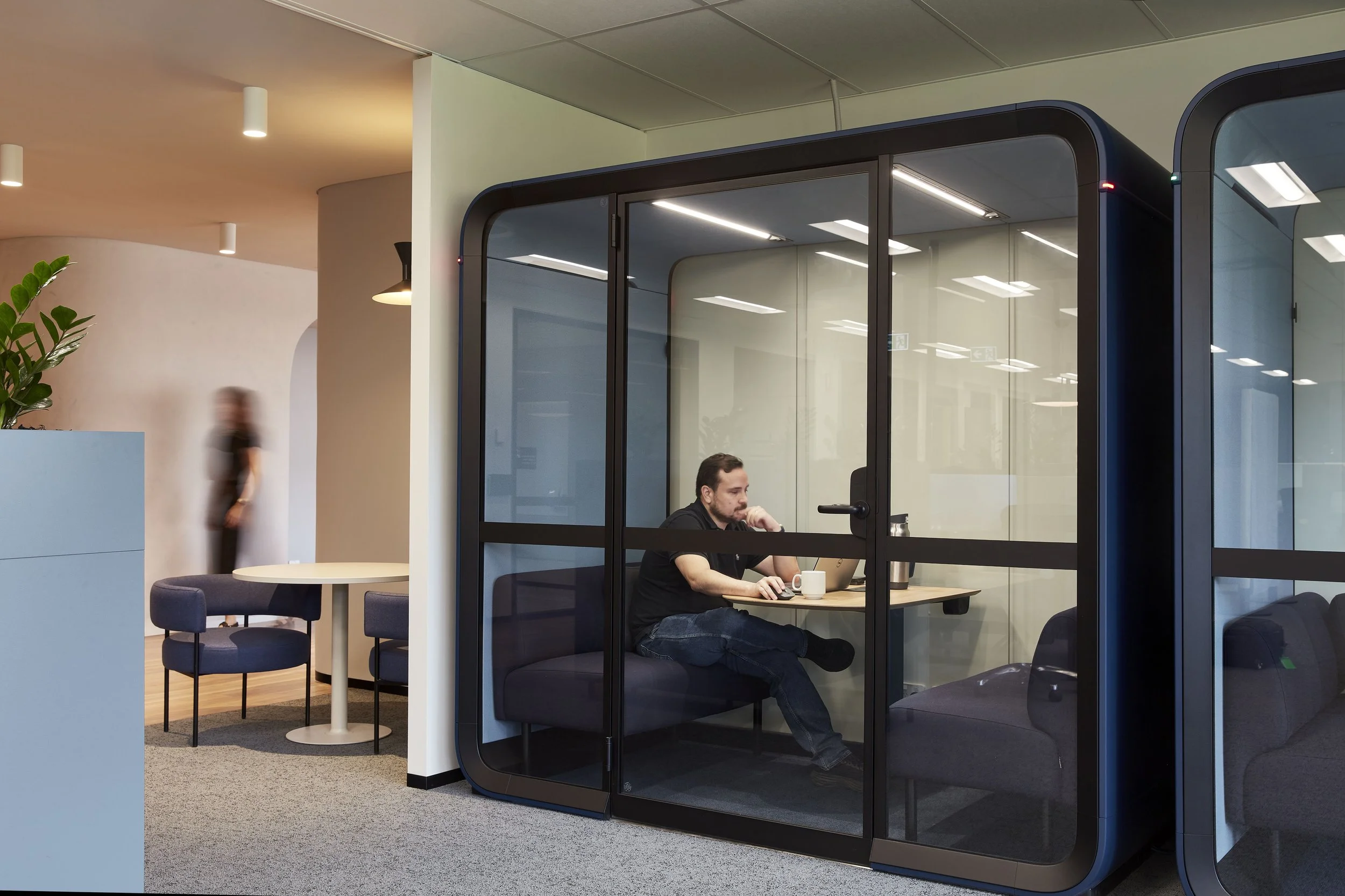
People need choice, control and environments that support focus, recovery and different modes of work.
the evolution of workplace expectations
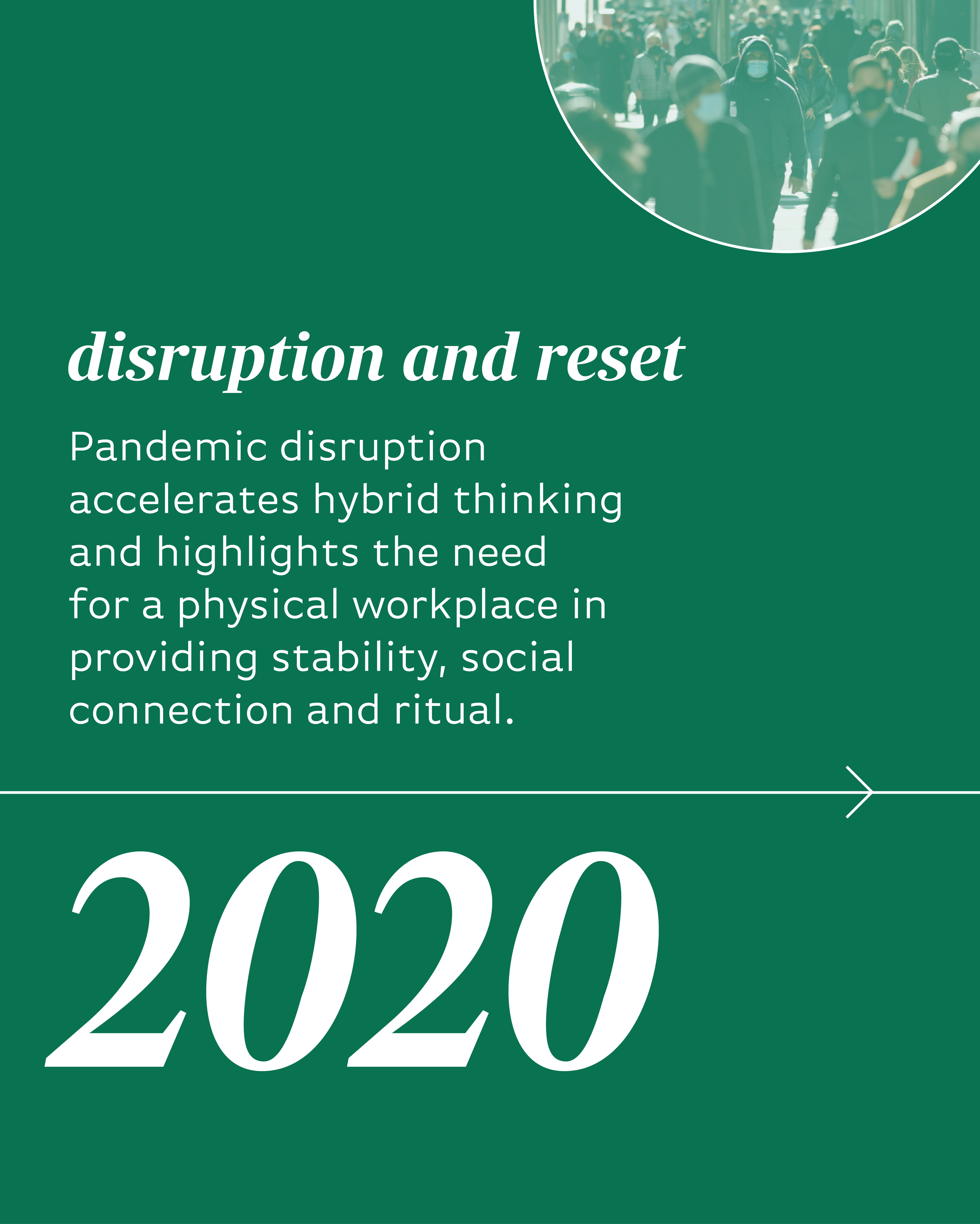
In 2019, this next generation of leaders imagined the future workplace as a groundbreaking environment for belonging, community, ergonomics and technology. As the decade unfolded and the pandemic reshaped work, their desire for playful exploration shifted towards holistic wellbeing, equity and autonomy.
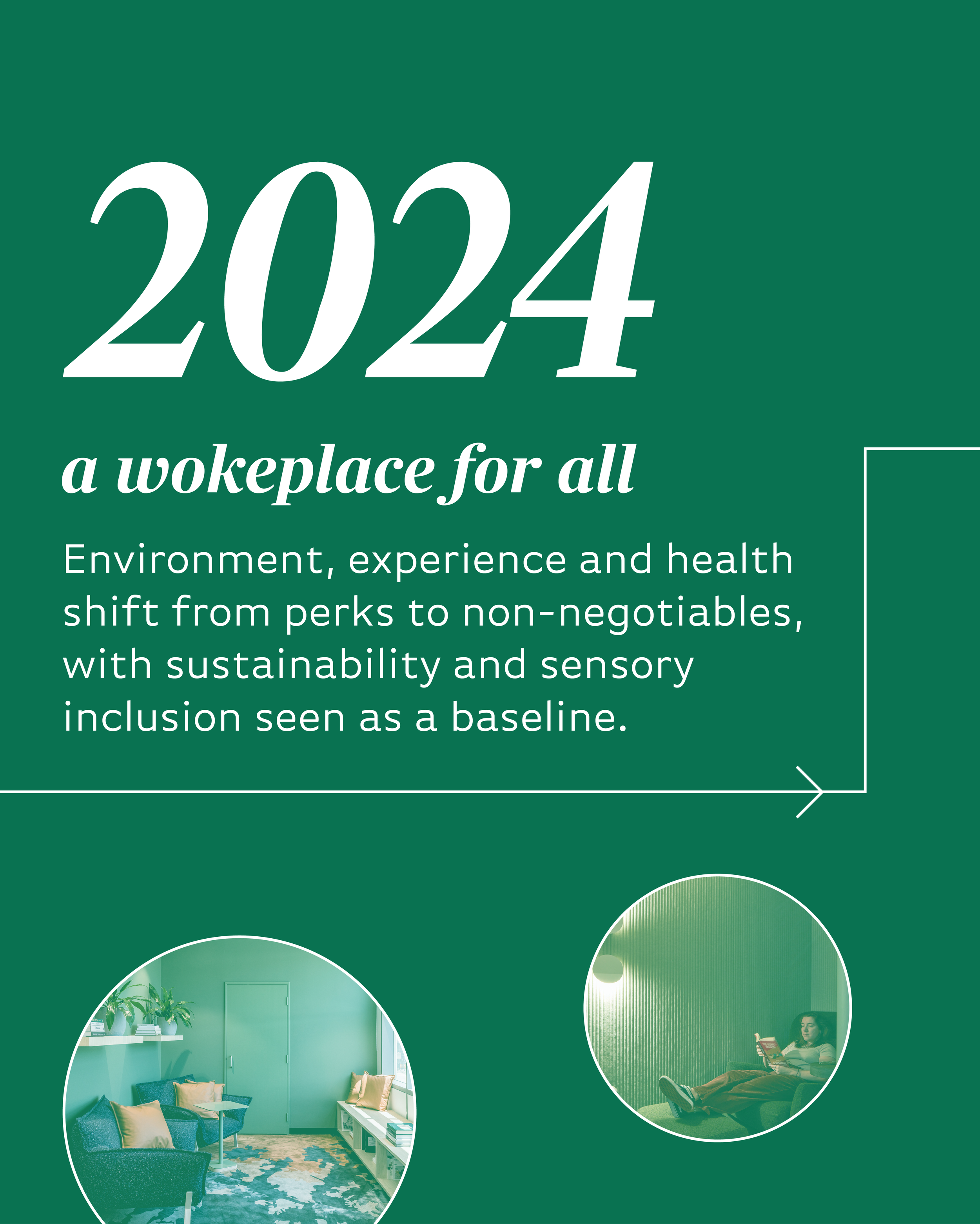
By 2025, environment, experience, health and autonomy had become baseline expectations, and the hybrid debate had largely moved on. Young people are now expecting to see tangible evidence of company values in a workplace that offers psychological comfort and meaningful connection.





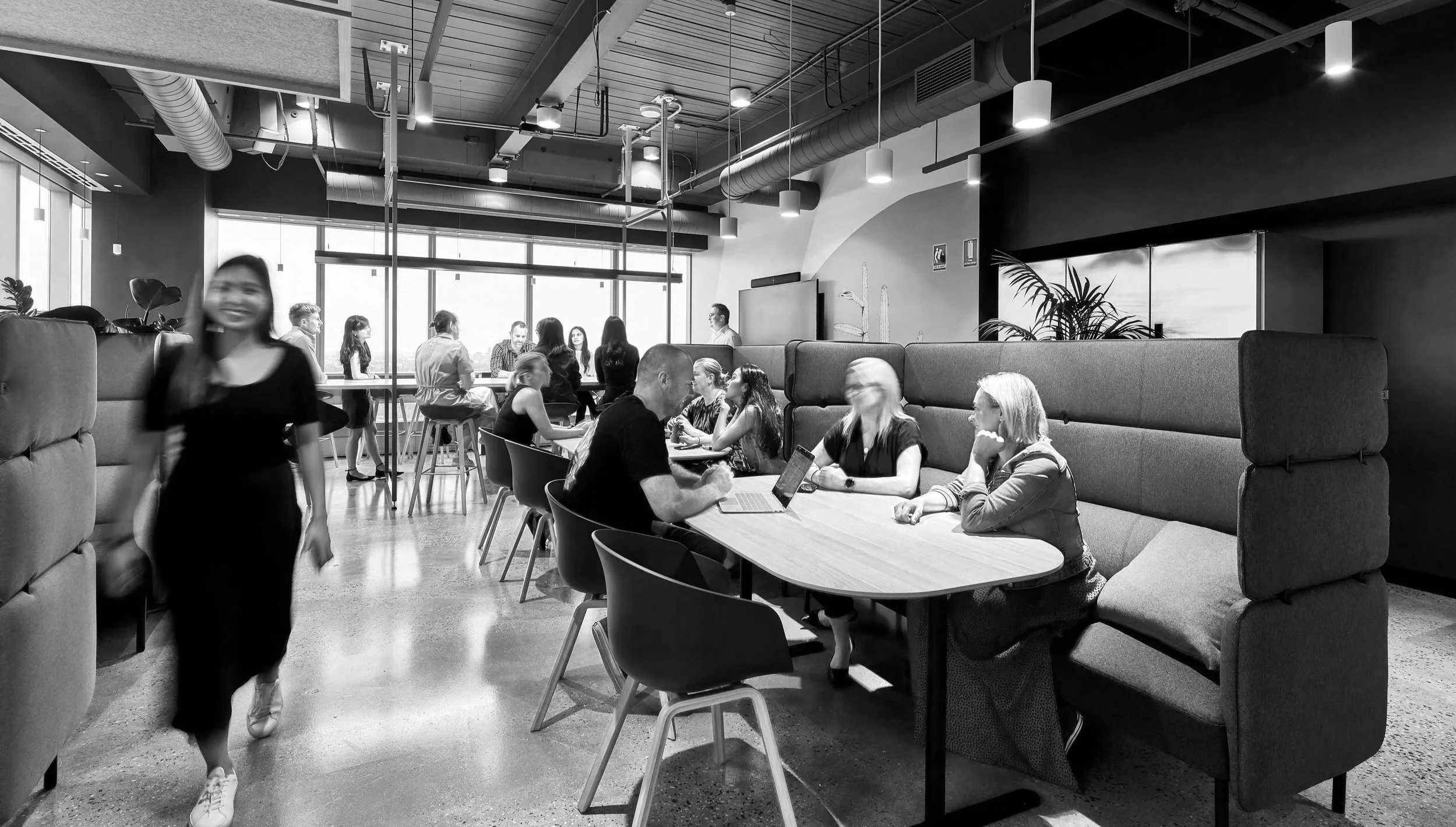
connection is the glue
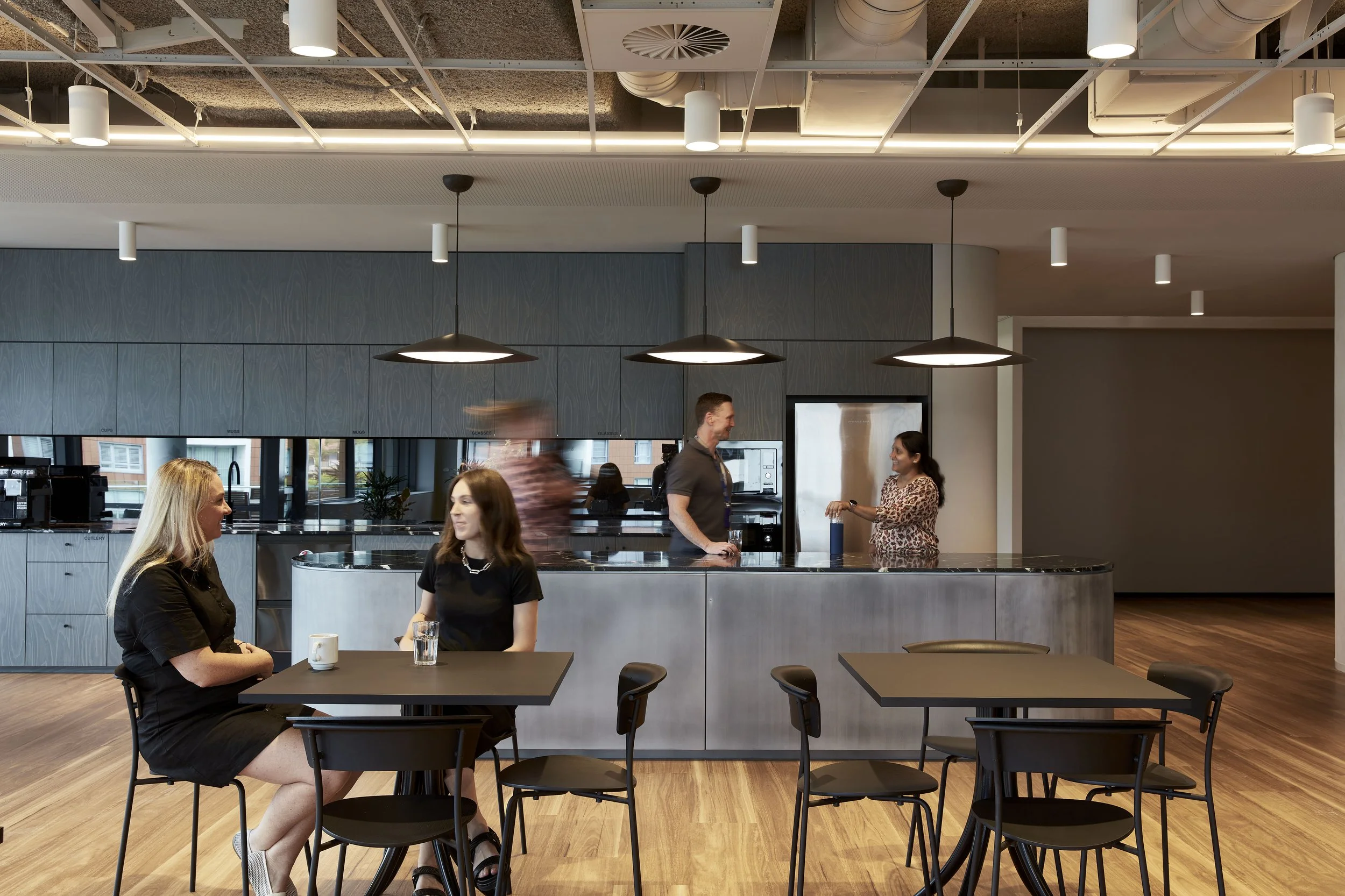
The strongest workplaces don’t just connect desks. They connect people. Proximity and visibility turn casual conversations into collaboration, ideas into action and colleagues into a community.
About the research
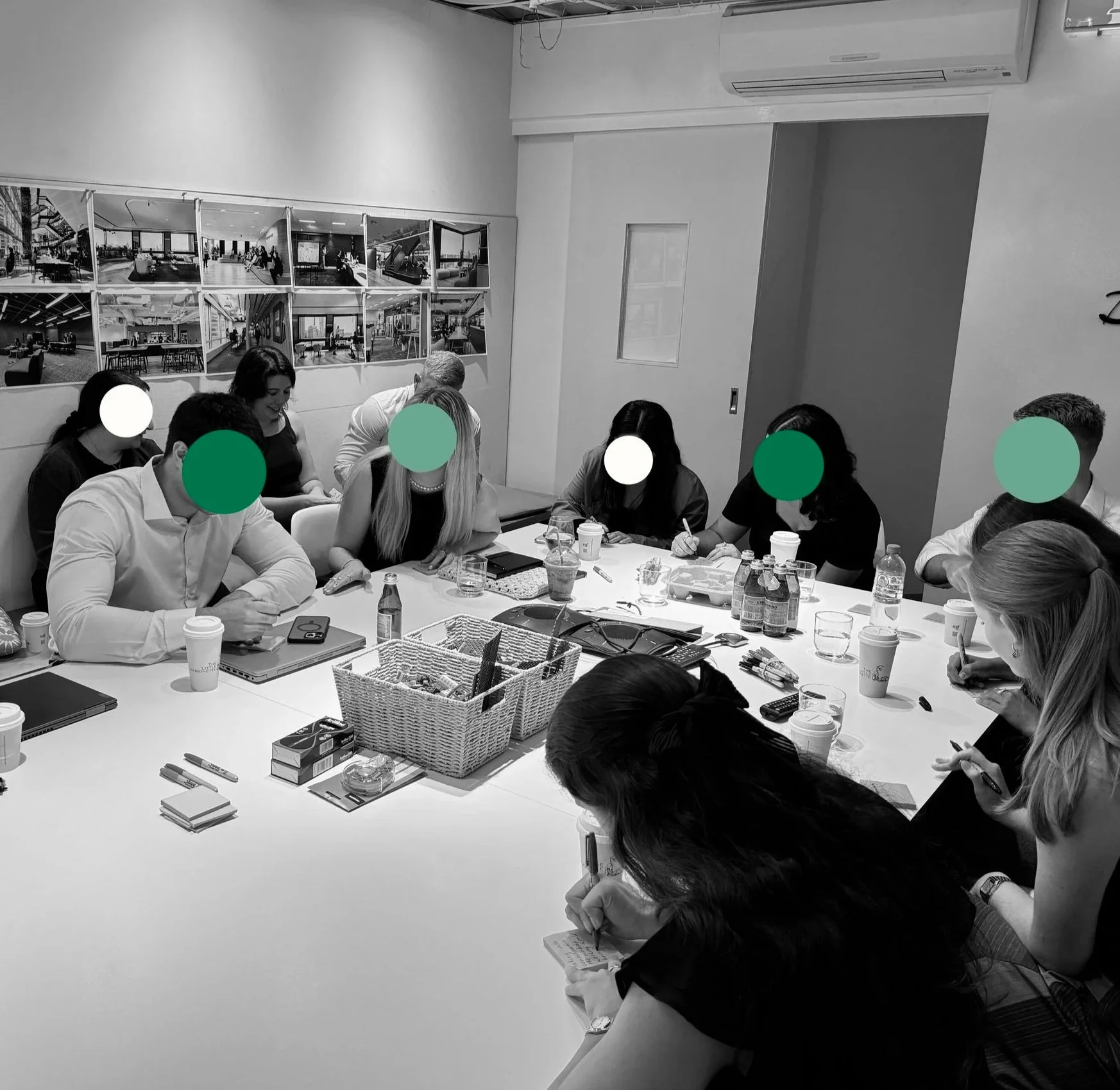
Between 2019 and 2025, our UNSW x Davenport Campbell study tracked how the next generation of leaders navigated turbulence: from remote work and AI to burnout, autonomy and changing expectations of place.
The Enduring Value of a Physical Workplace brings their voices together, revealing what makes in‑person work feel meaningful now, and offering evidence‑based guidance for organisations ready to rethink how their spaces support people, performance and long‑term loyalty.
Frequently Asked Questions
-
The study found that the value of a physical workplace has shifted away from simply being “a place to sit” towards “a place to connect, learn and recover”. Face‑to‑face interaction emerged as critical for mentoring, informal learning and trust; comfort (physical, functional and psychological) was a non‑negotiable; and rigid hybrid rules often undermined belonging compared with frameworks built on trust and autonomy.
-
Across six years, participants consistently preferred hybrid work, but not at the expense of real connection. The research shows that people are willing to commute when the workplace offers something they can’t easily get at home: meaningful collaboration, visible leadership, access to opportunities and spaces for decompression and deep focus.
-
Gen Z respondents value flexibility, wellbeing and authentic culture, but they still see a strong role for the office. The report highlights that younger workers use physical workplaces to build professional identity, access mentoring and see that their contribution matters. They expect those environments to align with their personal values, not just organisational branding.
-
Based on the research, the report recommends shifting investment towards environments that enable offline relationships, everyday learning and genuine autonomy, rather than relying on attendance mandates or “statement” spaces alone. It argues that organisations should design workplaces around connection, comfort and growth if they want in‑person work to feel valuable and “worth the commute” to the next generation of leaders.
-
Our research suggests that the most successful organisations will treat the office as a strategic tool for connection, culture and growth rather than a default destination. As hybrid work, AI and cost‑of‑living pressures continue to reshape careers, physical workplaces that support learning, wellbeing and genuine autonomy are likely to become a differentiator for attracting and retaining the next generation of leaders.
Physical spaces will continue to evolve as engines for collaboration and growth, and our ongoing research is designed to track these shifts over time and help organisations make better decisions as expectations continue to change.