
What’s Coming for the Future of Work for Banking
Banking is changing faster than most banks are designing for. The shift is not just in how services are delivered, but in what a bank actually is, what it asks of its people, and what a workplace now needs to support.
For banks in the middle of major fitouts, campus consolidations, or planning next-generation headquarters, these shifts are not background context. They shape how teams collaborate, how culture is felt, and whether a workplace can keep pace with the organisation it serves – they determine whether your workplace is still working in 2035.
Below, we share 5 key shifts that we are seeing and the effects that they’re having on workplaces for the world of banking.
1. AI IS MAKING BANKS MORE HUMAN, NOT LESS
Every major consultancy tracking AI in banking – Deloitte, McKinsey, PwC, KPMG – is reporting the same pattern: as routine work gets automated faster than expected, the human role becomes more relational, interpretive, and complex. But the more interesting finding is what's happening to customer engagement. For example, Bank of America reports that use of their Virtual Financial Assistant, Erica, doubled their customer daily logins rather than pushing people further away.
When AI helps to reduce routine processing, the office no longer needs to be organised around repetitive individual tasks. It needs to support judgement, problem-solving, coaching, collaboration, and fast decision-making.
2. CULTURE HAS BECOME THE COMPETITIVE ADVANTAGE
Visit any bank's website today and you'll see the same rates, the same app features, the same language about being there for you. Although the product gap has closed, what hasn't closed – and what can't be copied overnight – is culture. Culture is what people are actually choosing when they choose a bank to work for or bank with these days.
For those who have walked through many bank headquarters before, you know instinctively within five minutes whether an organisation truly believes what it says it stands for. The materials, the art on the walls, whether Country is acknowledged, whether the space works for everyone or just the majority – it all adds up to a truth that no brand strategy can override.
The banks we're most excited to work with are the ones who understand that the workplace is the culture. It’s not a representation of it and it’s not a stage set for it – the culture is right there, in the room, in the everyday experience of the people who work there. If sustainability, inclusion, and purpose matter to the organisation, they have to be legible in the space itself – not just a claim.
3. HYBRID IS INFRASTRUCTURE, NOT A PERK
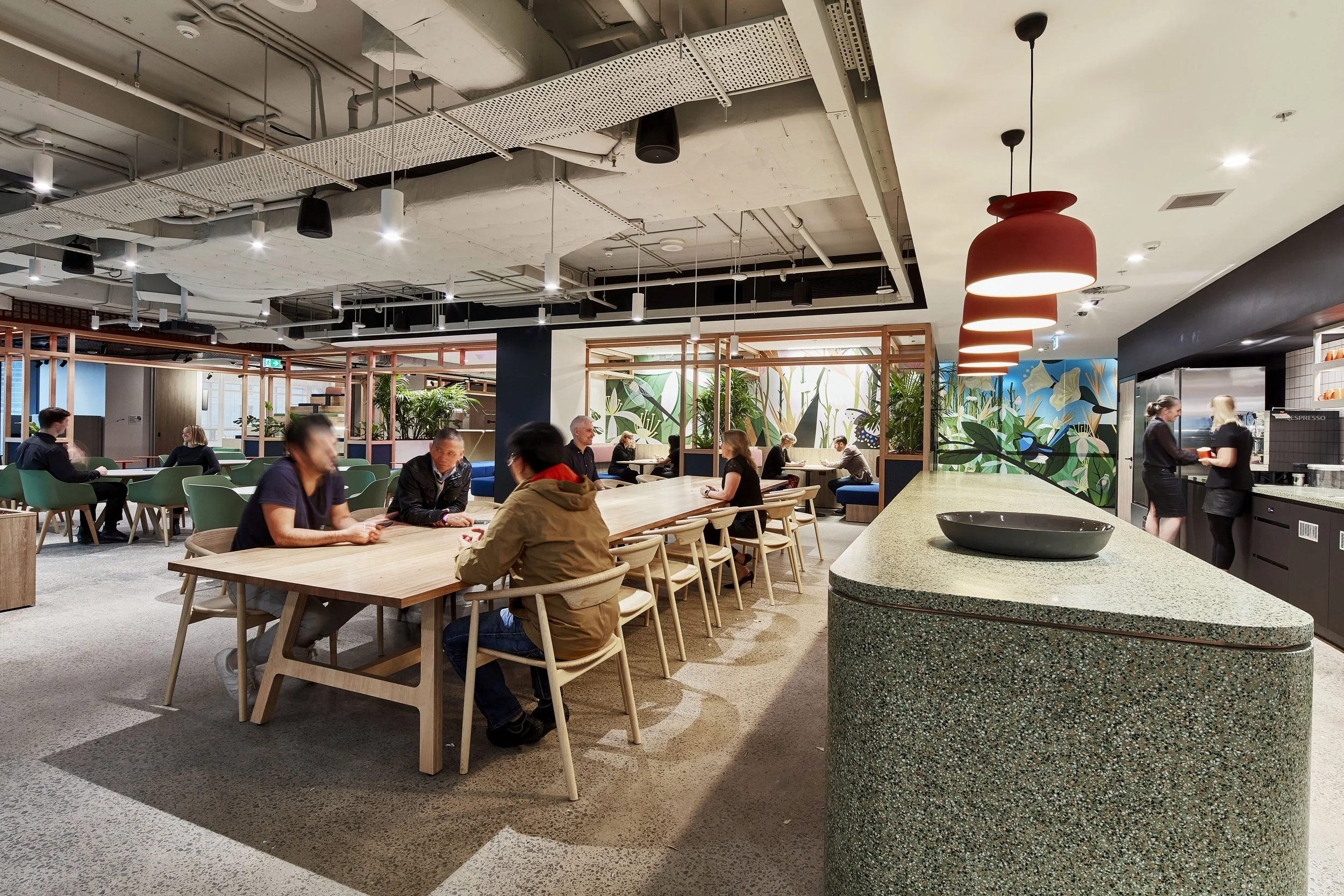
Hybrid work is no longer a transition phase. According to KPMG's Banking CEO Outlook, the vast majority of banking employees globally now work hybrid, and for most banking teams, this hybrid-working is now an operating condition. The conversation has shifted from "where should people sit?" to "why should people come in?"
The banks getting this right aren't policing attendance, they're creating days worth showing up for. Financial services have largely settled on Tuesday–Thursday as collaboration anchor days, which means the workplace needs to earn its place. That shifts the design question from desks-per-head to: what happens here that can't happen at home? Innovation labs, client studios, and team zones – spaces that give people a reason to be together.
4. BANKS ARE the backbone FOR SUSTAINABLE FUTURES
Banks have long played a visible role in shaping more sustainable and inclusive futures – not just through the projects they finance, but through the standards they set as employers and community partners. The UN Principles for Responsible Banking have elevated expectations around climate action, reconciliation, accessibility, and neurodiversity from aspirational commitments to core business imperatives.
The most progressive banks are no longer treating these principles as compliance exercises. They're using them as design briefs and as signals of where the sector is heading and what kind of workplace will attract and retain the best people.
The workplace is where these commitments become tangible. Circular materials, inclusive planning, cultural connection, and design for a wider range of needs all send a clear message to staff about whether the organisation's values are real. For bank teams, that matters deeply – it shapes belonging, trust, and pride.
5. BANKING IS EVERYWHERE, SO WHAT'S HQ FOR?
As banking becomes more digital, more embedded, and less dependent on physical retail presence, the purpose of a headquarters changes too. If customers interact less with physical banking environments and staff work hybrid, the head office is no longer just a container for people. It has to earn its place.
The HQ’s role is less about housing work and more about enabling the kinds of work that create advantage, such as innovation, cross-functional problem-solving, leadership visibility, cultural cohesion, and high-value partnership. It should function as a magnet for talent and a setting for the work that matters most when people are together. If it's not giving teams a compelling reason to be there, it's underperforming.

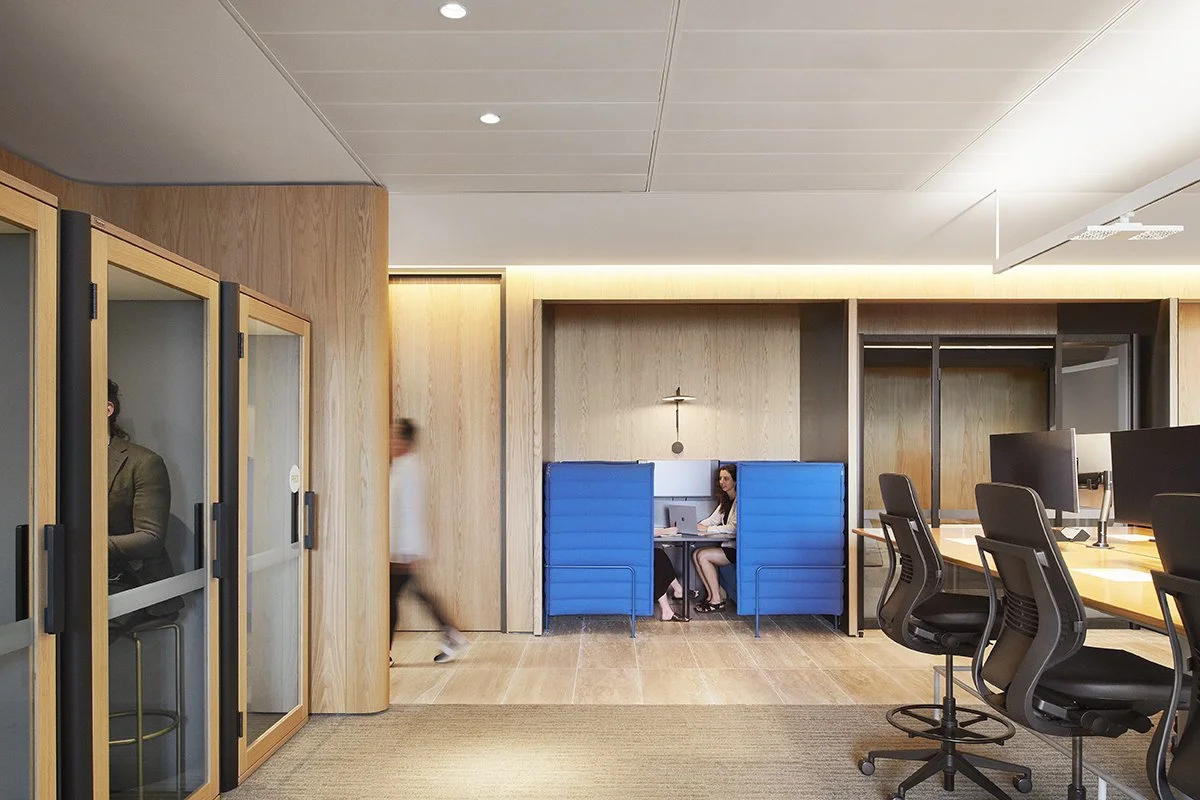
Banks are not just moving money anymore. They are shaping how people work, how communities connect and what kind of future gets built. Their workplaces need to keep up – not just technologically, but culturally, socially and spatially.
At Davenport Campbell, we're designing workplaces for banks that understand this. Not just for 2026, but for 2030 and beyond.
Sources:
KPMG 2026 Banking Trends Report
Deutsche Bank Global Hybrid Working Program
Forbes Banking Outlook 2026
UN Principles for Responsible Banking
McKinsey, Deloitte & PwC Banking Research
Bank of America
The Financial Brand Industry Research
Follow us on Linkedin and Instagram for more news and updates: